
Bob Cergol gets to the heart of the matter: What brings about Realization?
Bio: Bob was 19 when he met Richard Rose in 1972. He lived with Rose at his house in Benwood, WV, and on Rose’s farm. Twenty years later, he moved away to pursue his life. He married and started a family, but soon gravitated back to the path. TAT group work led to a series of events that triggered a spiritual realization that brought Bob an absolute, final answer. Over the past decade, Bob has delivered a number of presentations during TAT events and has authored numerous TAT Forum essays that were ultimately published in Beyond Mind, Beyond Death, a TAT Foundation Press book. Listen to his story in a podcast interview on www.SpiritualTeachers.org.
“We are what we do, not what we think we do.”
“The fact that you don’t act means you don’t have conviction.” – Richard Rose
I’ve found as I get older that some of the seekers I meet are getting long in the tooth too, and suffer from a lack of conviction (inability to act) brought on by a combination of age and success in life. They have time and money relative to their youth, but are reluctant to use them towards their spiritual path. Perhaps this is not done consciously, but could be that a life-time of work and struggle, not only in the outer world but also in the realm of personality, vanity and ego along with the effects of aging, have left them almost unable to act any other way. The strange thing about them is their ‘conviction’ of commitment to the spiritual path, and the simultaneous lack of ability to act in that direction.
The following is a list of characteristics peculiar to this type of fellow and some questions for him in the hope he will see, and resolve, his paradox:
 You have heard that all is One and there’s nothing to be done, and have used this to cleverly rationalize your inability to act towards spiritual work.
You have heard that one must work on oneself even while going about daily activities, but have used this too as a rationalization to avoid actual involvement in spiritual work, especially with others.
You find the view pleasing from resting high on the shoulders of those seekers who have gone before. Why do you refuse to carry someone yourself, to continue the chain?
Your spiritual work consists mainly of reading and ruminating, along with some so-called self-observation while going about your business. Seldom does it involve actual work, even less work with others, and never work for the Work.
Your comfort zone has been made secure by years of effort. Do you think you will make the trip within to the Truth by this continued comfort, both mental/emotional and physical?
Any suggestion of change is met with cleverness, for you have become averse to anything that might rock the ego from its throne.
This vanity of being always right even extends to your ideas about the ego itself, as evidenced in your insistence that you will ‘destroy the ego’, thus entering further into dichotomy.
Most of this occurs because of a deep-seated vanity that you are special, and thus have no need to involve yourself with the struggles of the less fortunate.
When facing confrontation about your lack of action, you put on a polite yet knowing smile. Your sense of superiority carries over into spiritual work, and is defended by very subtle yet effective masks.
You gravitate towards those that flatter your vanity, and if the going gets tough, you get gone.
This vanity is your biggest block, and keeps you from your inner self, though you think just the opposite.
When your superior attitude is pointed out, it is rationalized by declaring that underneath you still suffer from a feeling of inferiority. While this may be true, it is seldom worked on, and never resolved.
If a meeting or retreat is attended, it’s usually only once, for if there is no immediate profit from it, you feel there is no reason to go again.
The idea of work being profitable only after years of constant effort has somehow slipped your mind. Possibly because your vanity says you have ‘been there, done that’, now it’s time to relax and reap the rewards. You have found in business how to work smarter rather than harder and this gives you an edge over the competition, but what is it you actually do with this newfound time?
You expect teachers and fellow students to cater to your schedule and seem to have no sense of how much actual work and effort they have sent your way.
Do you have an understanding that they are actually working, in actions as well as words, to get you to do the same?
Do you think you could reverse the habit of feeling you deserve something for nothing, and start paying, with your actions, for what you take from teachers and fellow seekers?
Something for nothing is a valid method of work, but only if it involves between-ness. You trade your ‘something’, the vanity of the ego and its suffering, for the inner self, which knows its own nothing-ness.
Bob Fergeson
Audio of The Listening Attention
Several chapters of my book, The Listening Attention, are now available in audio on YouTube, check them out here!
The Listening Attention Playlist- YouTube
Bob Fergeson, author of The Listening Attention and Dark Zen: A Guru on the Bayou, is a spiritual teacher who focuses on the nuts and bolts of spiritual seeking while also conveying with his presence the ineffable message of Reality. Hopefully this Bob Fergeson interview offers a taste of both.
In this episode with Bob Fergeson, we discuss the emotional traumas and “knots” which can block one’s ability to access the Listening Attention. Bob offers tips and techniques for releasing these knots and freeing this blocked energy.
http://www.spiritualteachers.org/po…/bob-fergeson-interview/

Paul Rezendes and George Leoniak ask the questions: what does it mean to be Awake, or is Enlightenment real?
Author and photographer Paul Rezendes joins tracker George Leoniak in an impromptu discussion of what it means to be awake. Paul clears up misconceptions around the terms ‘awake’ and enlightenment’ and how they may not be what we think.
The first half is video of the two in discussion, while the second half features Paul’s landscape photos with the audio. Click the title link below for the vid on Vimeo:

* * * * *
For an introduction to Paul’s work, check out this interview by Shawn Nevins of Poetry in Motion:

* * * * *
For another video series of Paul and George talking about their experiences in an outdoor environment: check out their Mindful trackers series:

Pauls’ website with his books and photographs is:
photos by Paul Rezendes
by Franz Hartmann
“There are thousands of people who work hard all their lives, without accomplishing anything which is really useful or enduring. There are thousands who labour intellectually or mechanically to perform work which had better be left undone. There are vastly more people engaged in undermining and destroying the health of man than in curing his ills, more engaged in teaching error than in teaching the truth, more trying to find that which is worthless than that which is of value; they live in dreams and their dreams will vanish; they run after money, and the money will remain while they themselves perish and die.
The obstacles which arise from the external world are intimately  connected with those from the inner world, and cannot be separated; because external temptations create inward desires, and inward desires call for external means for gratification. There are many people who do not crave for the illusions of life, but who have not the strength to resist them; they have a desire to develop spiritually and to gain immortality, but employ all of their time and energy for the attainment of worthless things, instead of using it to dive down into the depths of the soul to search for the priceless pearl of wisdom. Thousands of people have not the moral courage to break loose from social customs, ridiculous habits, and foolish usages, which they inwardly abhor, but to which they nevertheless submit because they are customs and habits to act against which is considered to be a social crime.”
— With the Adepts, An Adventure Among the Rosicrucian, by Franz Hartmann (1910)
When you go into openness, the listening attention, you have become something good. You are something good rather than trying to feel good. You also have become in terms of: you don’t need to learn, you don’t need to think, you don’t need to analyze, compare, use concepts. You’re out of the thinking mind. You are, you’re awareness, the listening attention. In that state all the thinking, comparing, etc., are seen as lower states of the body mind. They have their functions, but they cannot tell you what you are; the lower cannot create the higher.
This is how you describe becoming rather than learning. You go from experiencing and thinking to just existing, to being. This doesn’t happen by constantly trying to get thoughts in the right order, get the thinking right then you can become, it’s more like you have to get sick of the thinking and clearly see that’s it’s a dead end and drop it. There’s no thinking that has to happen per se, it’s only the realization of what thinking is, and how it doesn’t ever lead anywhere in terms of becoming.

“Track the most cunning animal of all… the self, and come face to face with who it really is.”
Photographer and writer Paul Rezendes has an unusual take on realization, formed in part from his years of experience in the outdoors as a wildlife tracker and teacher. Join him and fellow tracker George Leoniak as they take us on the journey of self-inquiry, into the wilds of our inner world to find the ‘self’.
“This is spot on and different enough in flavour, it should be shared”- TH
The complete video series on inner tracking, featuring Paul Rezendes and George Leoniak, is available for viewing here:
https://www.youtube.com/playlist?list=PLX-EJS3PQTD_dWyytfKEZUF8E14k3C7f-
The preface from his book, The Wild Within, gives a brilliant example of Paul’s realization: “realization is living, being energy that is aware or awake to what is, or to what is arriving in the moment. An awareness that is at rest and has no intention for anything to be other than what it is.”
View the complete preface here: http://mysticmissal.org/blog/?p=1002
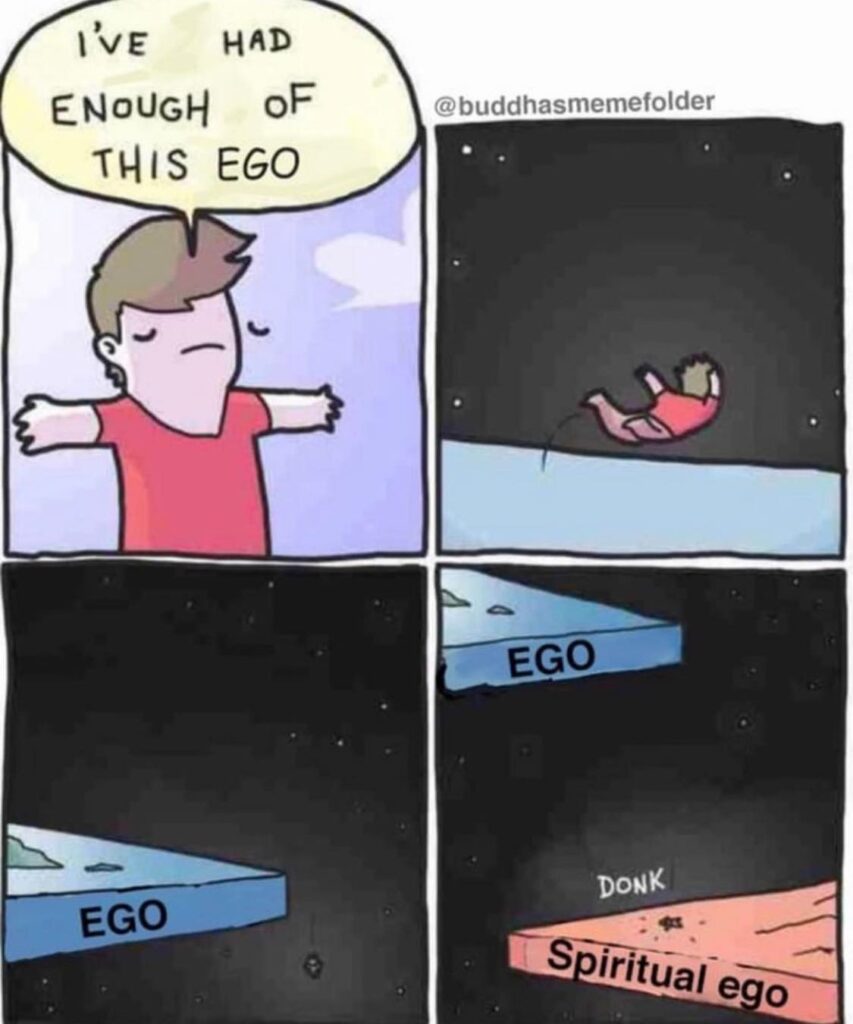
Transcendence of thought is not transcendence of self. Shifting the focus of attention away from thought and onto breath or body is a useful prelude to a meditation of self-inquiry, but as an entire meditative technique it is an exercise in self-forgetfulness. It may lead to a wonderful experience but the mind is simply resting on the I-thought, and that I-self is having a very pleasant experience while remaining safely hidden behind the cloak of mental quietude and physical ease. The notion of “coming into the body” is a form of engaging in what Alfred Pulyan describes as Ego1-Ego2.* The experience generated from this meditative technique is not the absolute realization that Rose, Nisargadatta, Maharshi, and others speak about. There is always a desire and a need for experiences to be extended in duration and intensity in order to satisfy the ego’s need for affirmation, progress, and the nagging, deep sense of lacking a final answer to the question of ultimate self-definition.
*Pulyan wrote about the Ego dichotomizing itself in order to set up a dynamic of protecting and reinforcing a “boss” ego with the need created by having a subservient ego hard at supposed spiritual work of creating experiences and thoughts that affirmed ego-self.
~ Bob Cergol, 2014 Labor Day TAT presentation
* Alfred Pulyan, a mid-1900’s Zen Master who engaged with students through the mail, in one such letter wrote about the Ego dichotomizing itself in order to set up a dynamic of protecting and reinforcing a “boss” ego … by having a subservient ego hard at supposed spiritual work of creating experiences and thoughts that affirmed ego-self. ~ Bob Cergol
Alfred Pulyan, Ego1-Ego2 Incursus
(Devices to preserve Egocentricity)
We do not pull flowers up to see how they are growing, but Ego (Self!) cannot endure being out of the driver’s seat and so even in the “work” he tries to be both objective & subjective. To be specific, Ego1 wants to watch the progress of the work with an occasional criticism or pat on the back for the Master.
“How shall we handle Ego2?” is asked by Ego1. Or – “I don’t think I (who is “I”? – why Ego1) would have handled me (Ego2!!) quite that way.” Or: “Fine,” says Ego1, “that’s showing him (Ego2).”
This schizoidal device preserves Ego at the expense of a fictitious Ego2!! You have already started this process.
Sometimes Ego1 will say he is “seeking” & does not DESIRE TO FIND. What is this? A pleasure merely in the action of the reason? Apparently. In any case, Ego2 is not even necessary here. Ego is asserting the utmost “doubt even of doubt” & refusal to go even as far as the word “the” without definition. It is a sound & invulnerable position. So is advanced psychosis, but that seems more restful – at times! Such a position (like solipsism) is fine when one is healthy, happy, young & immortal. It gets an awful kick later.
Ego1, for all that, sometimes feels that his constant observation of Ego2 (“self-consciousness”) is unsatisfactory. He may feel that his division is a faked device. In love, he may for a time forget himself (which means – become spontaneous) & the experience is delightful, unaccustomed & turns out often to be most unwise. It occurs often when young & when judgment would be desirable (for a change!), especially if the girl is not so spontaneous! If they both are, it is wonderful, but again the claims of the everyday come in, & the magic fades away. Everything in Japan used to be a “way.” There was a “way” of sword-play, of wrestling, of flower arrangement, of drinking tea, of commerce even, of drawing & painting – and the characteristic of each was spontaneity. Even archery (incredible results even in semi-darkness, splitting one arrow with another) – & such spontaneity daunts us. We are system-minded. Zen may seem to be a “system” of mass-production, but the essence of the work is individual. I have no “system” whatever for the same reason – no two people are alike. Certainly egocentricity is always the devil to be conquered, but from that central point he (ego or self) diverges in innumerable ways & uses every imaginable device, some very snide, others really subtle. He may know it too – and still throw up a smoke-screen! He resists the means to release – to the point of murder even (fortunately, since he is free to withdraw at any time, he usually withdraws under a confusion of self-justification. But if he were trapped – as I was – oh boy!!! In the Reichian technique for example the room is often a shambles).
So we DO “protect” something. And how! What? Ego? Oh no – while we live we are of course “we” & always that remains – but the “boss conception,” the “ultimate decider,” the “second line of defense,” these he INSISTS on at all costs. So Jung & others know the truth but sit in the audience (behind their desk for example) and are never part of the play. It is ludicrous to think I could help Jung – he is heavily armed. I could get ONE letter from almost everybody by promising “a new technique” but to get involved in it. Oh dear no! Most certainly not! Utterly fantastic! – who knows what – Thus Jesus was correct. It is the treasure of the humble & for this goodly pearl a merchant sold all he had – and bought it. I can persuade almost anybody to say “O.K. Go ahead! What do I have to lose?” It is a Pyrrhic victory, it is unreal. In that way one sells toothpaste. They must come to me and really want it. Since they can easily push God away, how can I succeed where God does not? This is not a mystery I can solve. But the truly accessible, as Jesus said, are FEW. Up to you – And so many words!
~ Correspondence with Richard Rose
material taken from July 2016 TAT Forum, http://tatfoundation.org/forum2016-07.htm#4 –Thanks to Art Ticknor, Editor